ACT: Core Sections, Optional Tests, and Study Planning
The ACT is a college admission exam that measures academic readiness through core English, mathematics, and reading sections, alongside optional science and writing assessments. Your core section results combine to form your main admission metric, while optional sections provide additional subject supporting details for specific university programs. Knowing this layout helps you tailor your practice schedule effectively.

Last updated:
The ACT is a standardized college admission assessment covering core English, mathematics, and reading tests, with optional science and writing sections. According to the ACT score guide, English, mathematics, and reading determine your Composite score, while optional science and writing results appear separately on your official record.
When you review a timed practice set, check your raw score and reporting category accuracy across rhetorical skills, algebra, or passage comprehension. If geometry questions slow your pacing, dedicate your next study session to targeted coordinate and plane geometry drills before taking another full section.
How ExamLuma helps
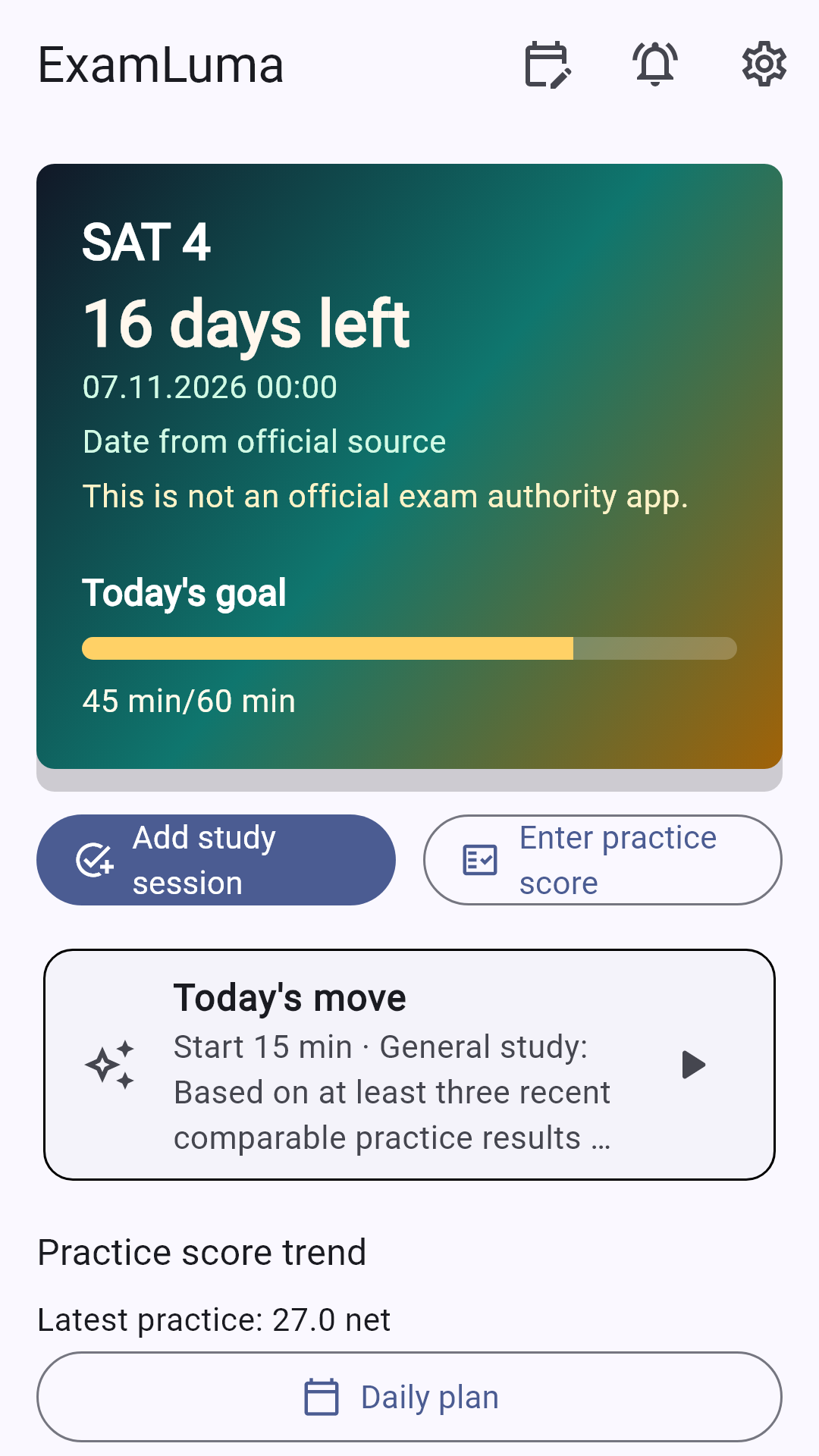
Keep track of your study plan in ExamLuma. ↗
Set a daily study goal and follow your progress. ↗
Record completed study sessions. ↗
Frequently asked questions
Which sections count toward the main ACT score?
English, mathematics, and reading form the core combination, while science and writing remain optional additions that are reported separately.
When should you add the optional science section to your study plan?
Read the test requirements of each college and program on your list, then include the optional science section in your preparation when it matches those requirements and your chosen test registration.
How can you use category breakdowns after a practice session?
Group your answered items by reporting category to see which grammar conventions, math domains, or reading passage types need extra review blocks.
Sources