Raw Score: How Pre-Scale Correct Counts Work in Practice
A raw score is the initial pre-scale measure of your performance on a test section before the exam provider converts it onto the official reporting scale. On traditional fixed-form assessments like the ACT, it equals the total number of questions you answer correctly. Tracking correct counts during topic drills helps you measure daily accuracy improvements.

Last updated:
A raw score is the unadjusted pre-scale measure of test performance before an exam provider places results onto its reporting scale. According to the ACT score guide, your raw score on the ACT equals the number of correct responses you earn in a section, which then converts into a scaled score. On the adaptive SAT, College Board structure documentation notes that second-module difficulty depends on first-module performance.
During weekday study blocks, track your correct responses on topic drills to monitor concept mastery, then review every missed question by error type before your next full practice test.
How ExamLuma helps
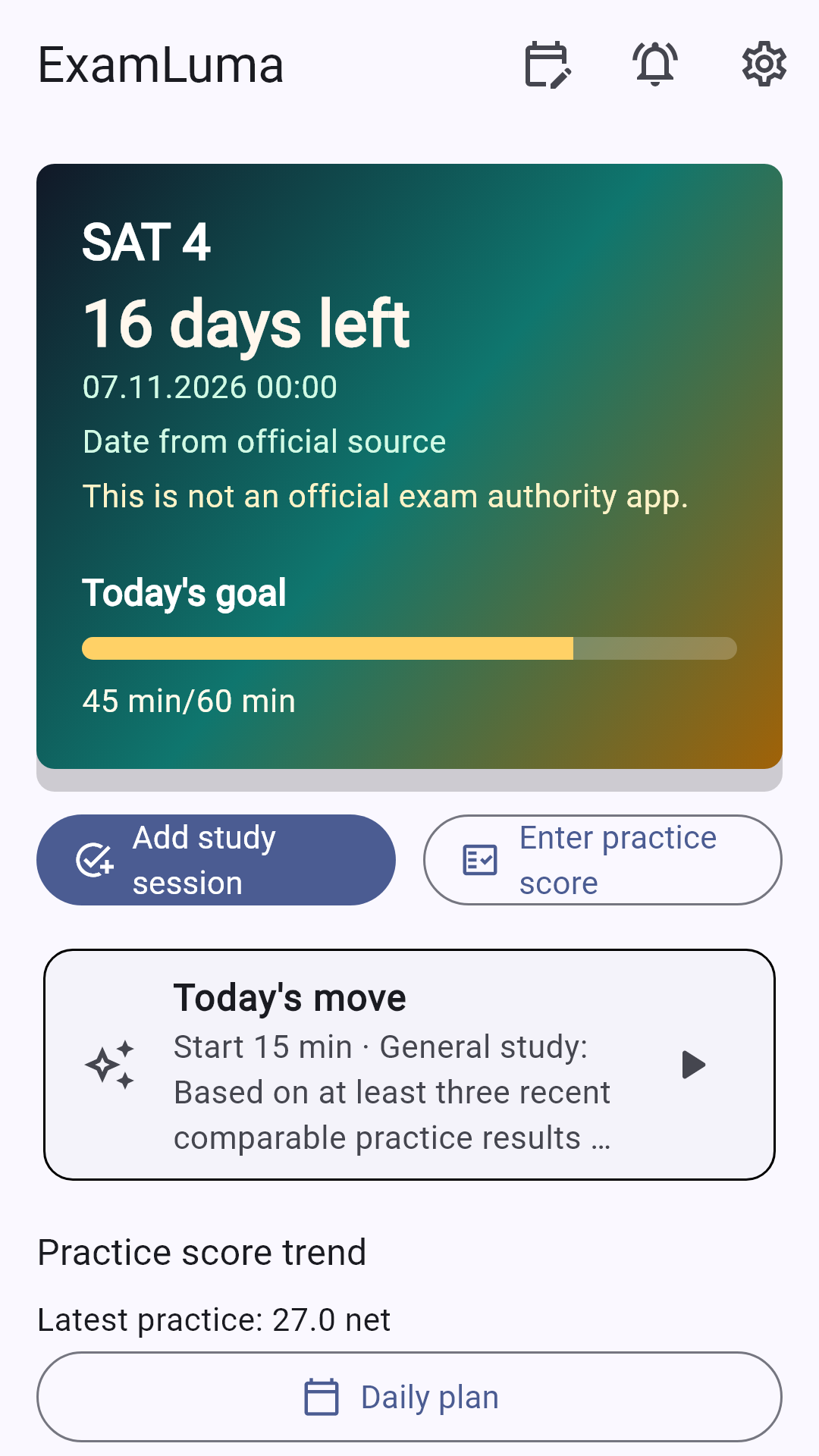
Keep track of your study plan in ExamLuma. ↗
Set a daily study goal and follow your progress. ↗
Record completed study sessions. ↗
Frequently asked questions
How is a raw score calculated on the ACT?
It is determined directly by counting the total number of questions you answer correctly within each test section.
Why do adaptive exams handle scoring differently from simple correct counts?
Adaptive assessments route you into different second-module difficulty levels based on first-module performance, so the testing organization models item difficulty alongside accuracy.
How should you use correct question counts during daily practice?
Use accuracy counts on short untimed and timed topic sets to verify that you understand a concept before testing yourself on a full exam.
Sources
- Understanding Your ACT Scores · ACT
- How the SAT Is Structured · College Board