ACT Writing: Essay Assessment Guide
ACT Writing is an additional essay assessment in which you analyze multiple perspectives on a complex issue and develop your own position. ACT reports the writing result separately from the Composite score and uses it with English and reading to produce an ELA score. National registrants choose writing; school-day availability is set by the state or district.

Last updated:
ACT Writing is an additional 40-minute essay assessment that measures your ability to evaluate different perspectives on an issue and construct a clear, well-organized written argument. ACT reports the essay result separately from your Composite score, and a writing score combines with ACT English and reading for the ELA score. National registrants can choose writing; a state or district decides whether it is included in school-day testing.
In a practice session, spend your opening minutes drafting a structured outline before writing full paragraphs. State your central thesis clearly, examine the strengths and tradeoffs of the provided perspectives, and connect each body paragraph back to your overarching claim with concrete examples.
After completing a practice essay, review your draft for paragraph transitions, varied sentence structure, and depth of reasoning. Building a repeatable outlining habit helps you write with clarity and purpose on exam day.
How ExamLuma helps
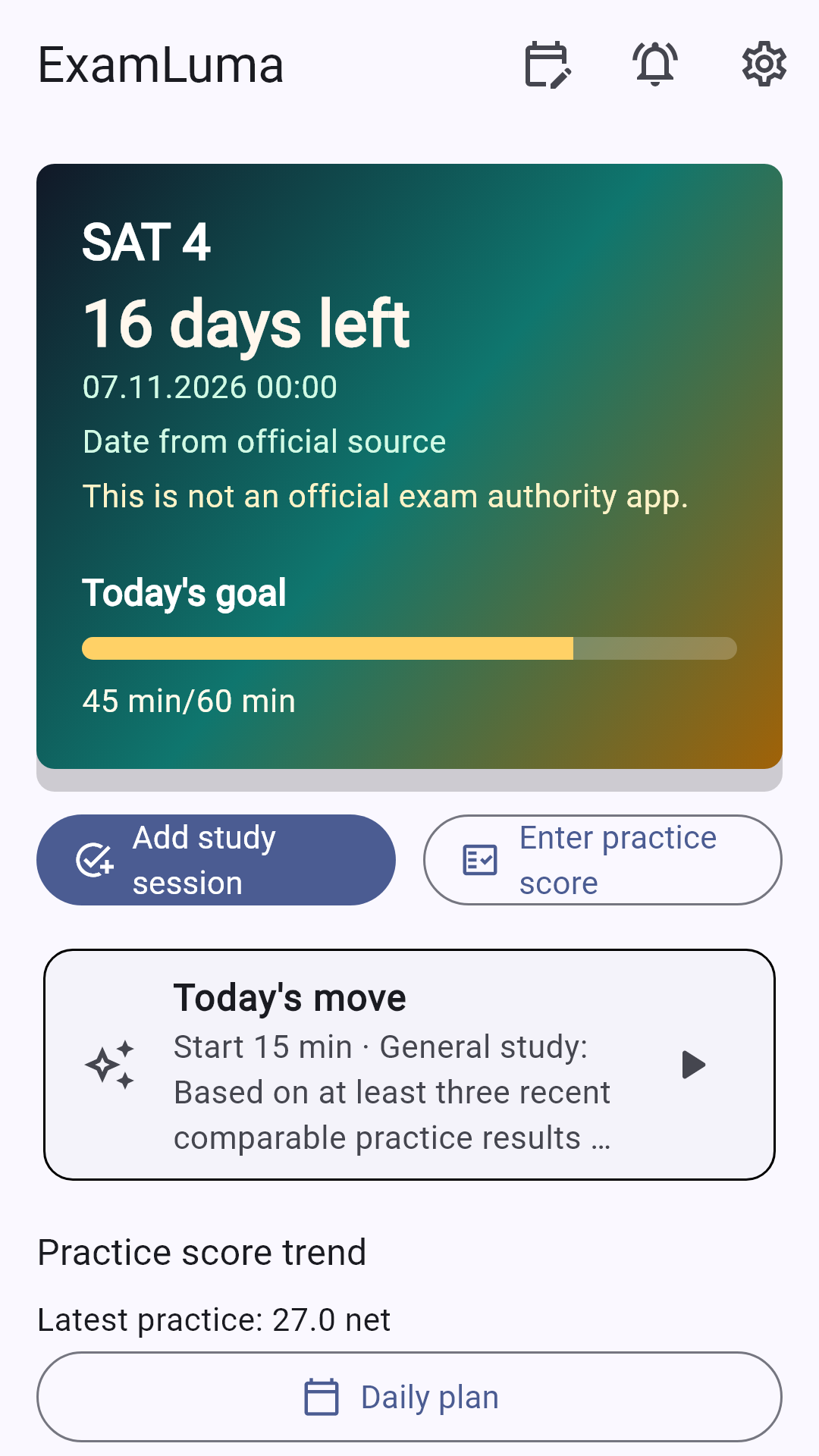
Keep track of your study plan in ExamLuma. ↗
Set a daily study goal and follow your progress. ↗
Record completed study sessions. ↗
Frequently asked questions
How is ACT Writing reported on your score report?
ACT reports the writing result separately from the Composite score and uses it with English and reading to calculate an ELA score.
What task do you complete during ACT Writing?
You read a short prompt presenting multiple perspectives on an issue and write a cohesive essay that evaluates those views while stating your own position.
How can you prepare effectively for the essay?
Practice outlining how your main thesis connects to each supplied perspective and support your points with specific, well-explained examples.
Sources