JLPT levels and the Japanese each one assesses
A JLPT level identifies the difficulty of a Japanese Language Proficiency Test paper and the Japanese comprehension expected of its candidates. The official descriptions pair reading and listening examples with each level. They help you judge how well you follow everyday conversations, practical information or complex arguments in Japanese.

Last updated:
A JLPT level describes the Japanese you need to understand on a particular version of the exam. The official level descriptions run from N5, the easiest, to N1, the most demanding. The JLPT assesses vocabulary and grammar alongside reading and listening comprehension.
A student in a Japanese course in Melbourne might read a short message about a train delay quite comfortably. Following a newspaper column on rail funding calls for a different skill, such as recognising where the writer challenges an earlier claim. Trying both texts can help the student choose a target. Checking listening comprehension separately will show how that choice holds up when the information comes through a conversation.
How ExamLuma helps
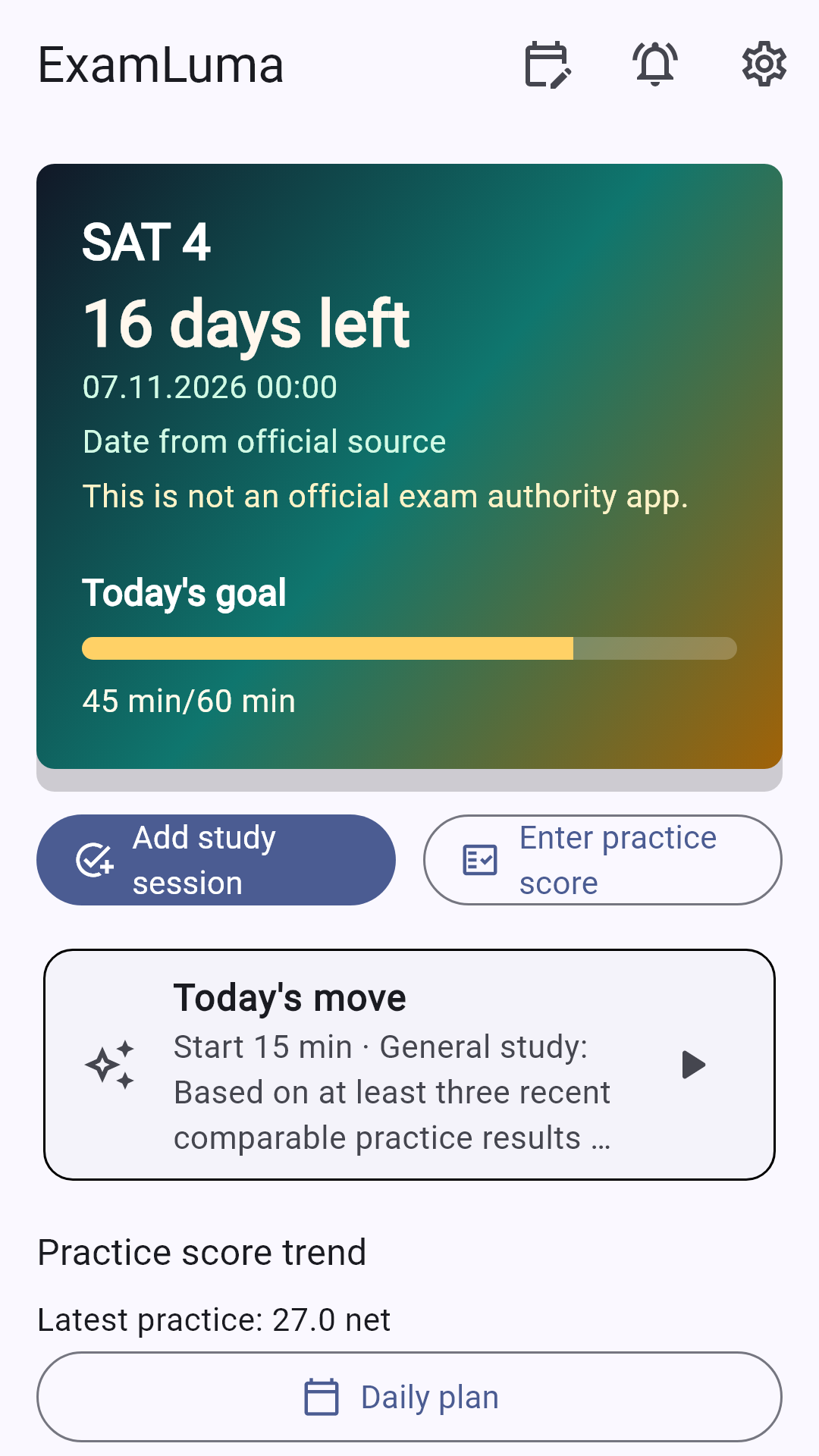
Keep track of your study plan in ExamLuma. ↗
Set a daily study goal and follow your progress. ↗
Record completed study sessions. ↗
Frequently asked questions
Which end of the scale is harder?
The number gets smaller as the Japanese required becomes more advanced.
Does the test include a conversation with an examiner?
The test assesses language knowledge, reading and listening. Speaking and writing fall outside its direct assessment.
How can I choose between neighbouring levels?
Compare the reading and listening descriptions for both levels with tasks you can already handle in Japanese.
Sources
- Summary of linguistic competence required for each level · Japan Foundation / Japan Educational Exchanges and Services
- Four Key Characteristics · Japan Foundation / Japan Educational Exchanges and Services