Spain MIR Scores: Raw Marks, Adjustments and Ranking
The MIR result used in Spain's specialist medical training selection involves more than a tally of examination answers. First comes an exercise mark, then adjustment using the relevant cohort, alongside a separately scaled academic record. This guide explains how the components lead to the published order for selecting training positions.

Last updated:
The answer count is only the beginning
MIR is the examination route used by many doctors seeking specialist training in Spain. Your place in the allocation process comes from a formal ranking, which is calculated from examination performance and a documented academic record. The MIR examination page describes the test experience; here the task is to understand why a practice tally differs from the official selection result. Find the correct result column before comparing your score with another candidate.
Start with the particular examination mark
The current BOE call gives a correct response 3 points, subtracts 1 point for an incorrect response, and assigns 0 points to a blank answer. This produces the valoración particular del ejercicio, the starting mark before cohort adjustment. Use the final official answer key because changes to accepted answers can affect this calculation.
The initial result is helpful for reviewing pacing and risk. A candidate deciding between an educated answer and leaving an item blank should understand the negative marking rule. For study records, classify errors as missing knowledge, misread clinical details or time pressure; each calls for a different review method.
The cohort adjustment and academic record
The BOE scoring method uses the mean among the top 10% of exam marks to set an examination correction factor linked to 90 points. Academic records are corrected separately using the mean of the top 10% of records, linked to 10 points. These reference means come from actual participants, which explains why a raw rehearsal mark supplies only part of a final result.
After applying the relevant factors, corrected examination and academic components are combined. The official call presents individual totals with 4 decimal places and requires an examination score greater than 0 to enter position selection. The official ordering and the tie-breaking procedure determine the sequence in which candidates can choose specialties and centres.
Reading the selection list responsibly
Check your individual examination mark, the adjusted examination mark, academic merits, final total and order number as separate fields. The order number concerns the specific selection round. Available training posts and the candidate’s eligibility category must be considered alongside it. Past selection outcomes are useful historical context, while the current official selection records govern actual choices.
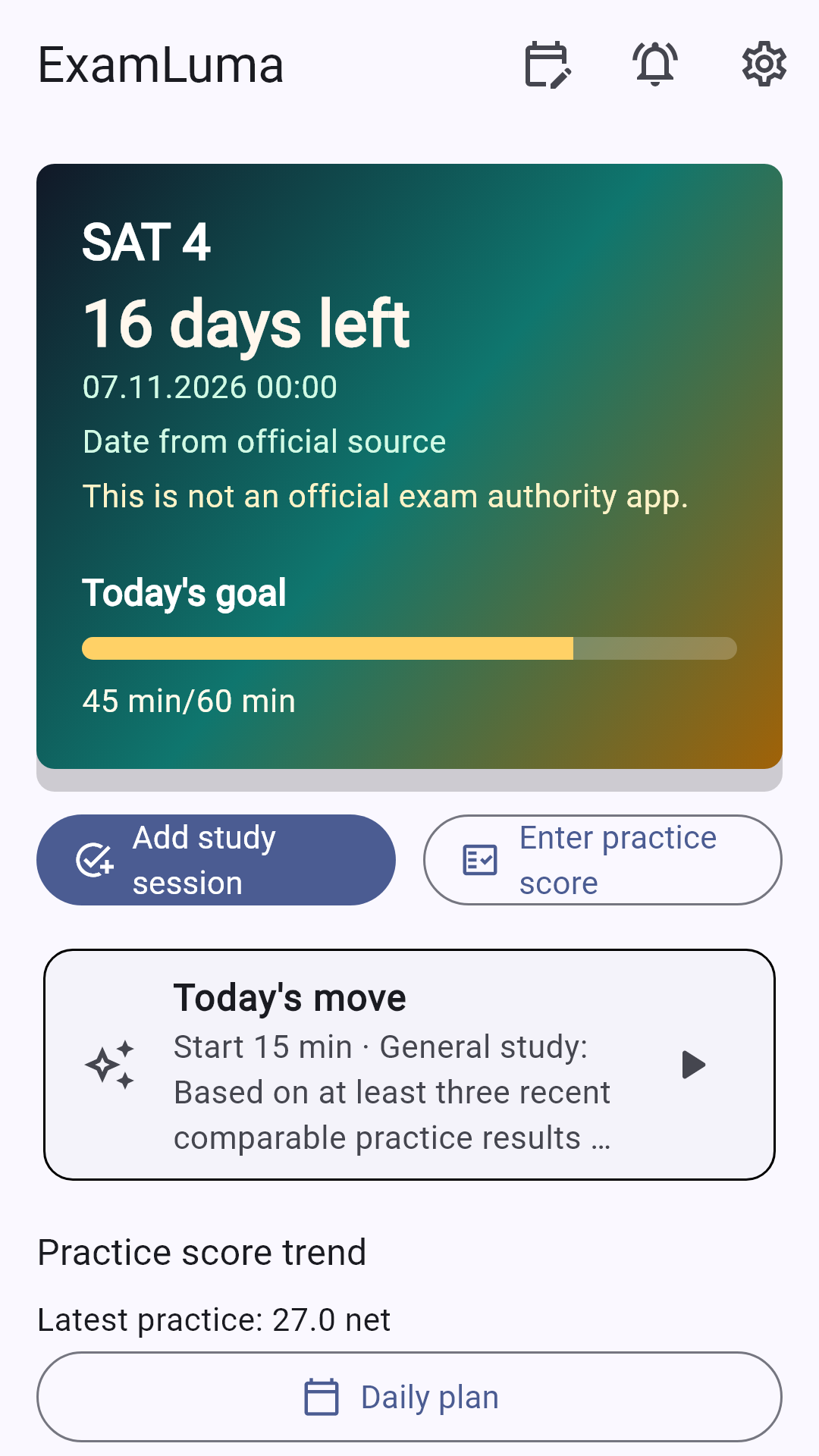
ExamLuma helps you organise MIR preparation with a countdown, daily study goal and focus timer. After mock exams, enter the correct, wrong and unanswered counts to track your practice trend and weekly study time; use clinical-topic notes for more detailed review.
How ExamLuma helps
Keep track of your study plan in ExamLuma. ↗
Set a daily study goal and follow your progress. ↗
Record completed study sessions. ↗
Frequently asked questions
How are wrong answers treated?
Incorrect answers reduce the initial exercise mark; use the official answer key when checking your tally.
Can a practice score give an exact final ranking?
The published adjustment depends on the real applicant cohort and the confirmed academic record.
Does reaching the eligibility requirement secure a position?
Placement depends on official ranking, the relevant candidate category and the positions remaining during selection.
Sources
- Spanish official specialist healthcare training call · Boletín Oficial del Estado