UCAT Scores: Cognitive Total, SJT Bands and Deciles
Your current UCAT report combines three cognitive subtest scores and provides a separate Situational Judgement band. The component results help distinguish reasoning strengths, while the overall total supports comparisons within the same test cycle. Universities set their own selection policies. Read the current official scale and annual deciles before comparing your score with previous cohorts or admissions information.

Last updated:
Understand the current UCAT result
The UCAT report groups Verbal Reasoning, Decision Making and Quantitative Reasoning into a cognitive total. It also reports Situational Judgement separately. This distinction helps you understand which information an admissions team might use when assessing your application.
According to the UCAT Consortium’s current scoring rules, each of the three cognitive subtests has a scaled range of 300–900, with the combined total running from 900–2700. The test provider converts raw marks onto those ranges to support comparisons across forms. Read your total alongside the individual subtests, as a similar overall result can reflect different reasoning strengths.
Read Situational Judgement on its own scale
UCAT’s Situational Judgement scoring guide describes Bands 1–4, with Band 1 representing the strongest alignment with expert judgement. It is reported separately from the cognitive total. This is useful when a university considers both the overall reasoning score and situational judgement in its selection process.
The marking also reflects how closely a response aligns with the expected professional judgement. Some items can receive partial credit when the answer is close to the correct response, while Decision Making has its own provisions for partial marks on multiple-statement questions. Review the original task type when understanding practice performance, since a single total number hides these differences in question design.
What deciles tell you about your standing
The UCAT Consortium’s yearly test statistics organise scores into decile groups, each representing 10% of the tested cohort. A decile puts the result in context with that cycle’s candidates. Percentiles and deciles should be paired with the correct testing year because the overall cohort distribution can shift across cycles.
The UCAT format has also changed, which makes older totals particularly difficult to compare directly with the current scale. Use the official figures for the relevant test cycle instead of transferring an old admissions benchmark into a new score framework. A university may calculate its own rank among applicants, so its selection rule may refer to a different comparison group from the national UCAT distribution.
Putting a UCAT score into an application plan
Treat the cognitive total, individual subtests and SJT band as separate pieces of information when researching medical and dental programmes. Read each university’s current policy for the courses and year you are applying to. Some selection processes weigh UCAT alongside academic achievement and other application stages.
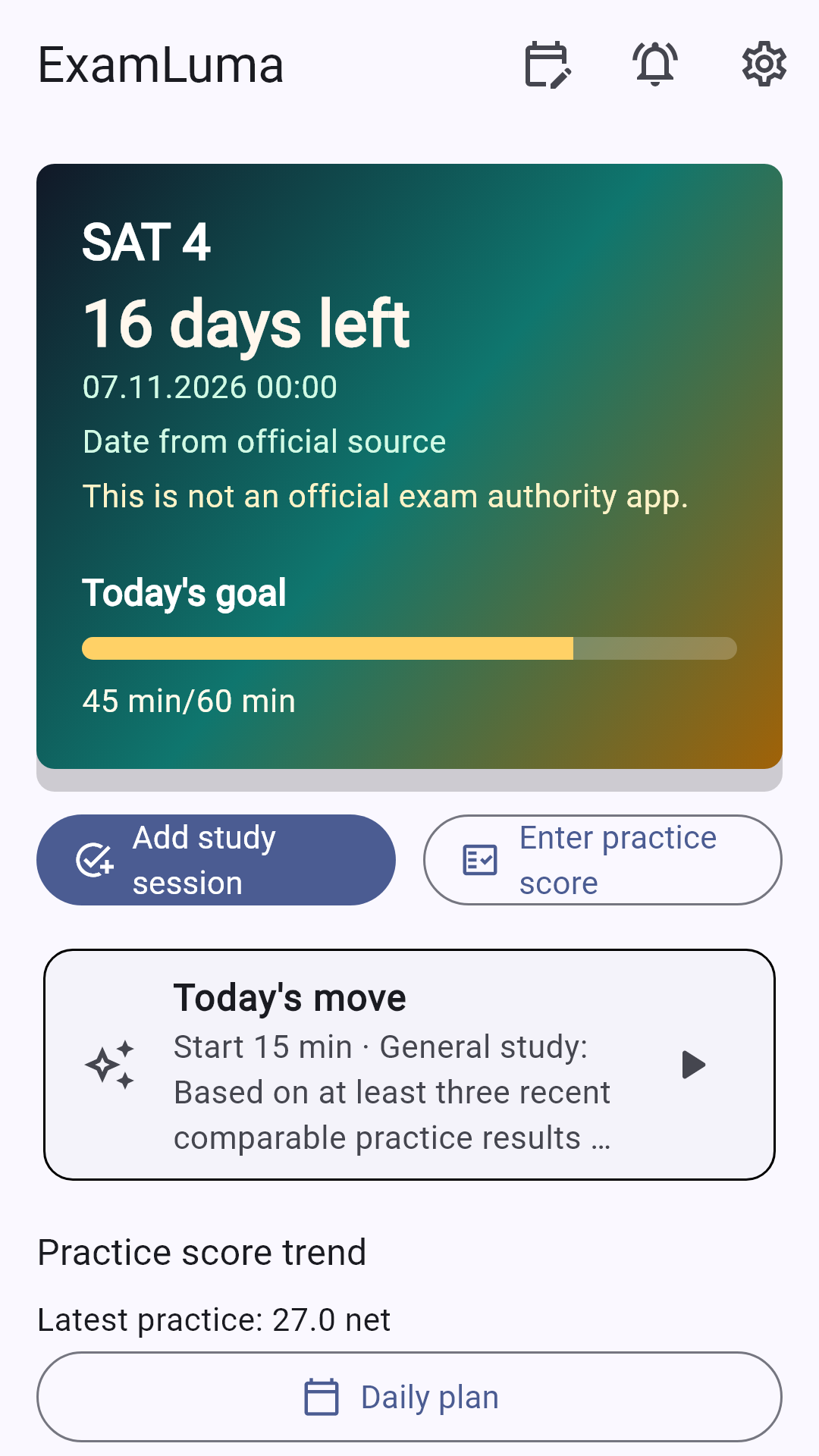
For preparation, use the UCAT study guide to choose specific reasoning tasks rather than practise against a generic number. ExamLuma can keep UCAT selected as your target exam, show a countdown, track daily study-time goals and time focus sessions. Enter correct, wrong and blank practice counts yourself and use your overall trend and weekly study statistics to direct the next review.
How ExamLuma helps
Keep track of your study plan in ExamLuma. ↗
Set a daily study goal and follow your progress. ↗
Record completed study sessions. ↗
Frequently asked questions
Which UCAT results are combined into the cognitive total?
Verbal Reasoning, Decision Making and Quantitative Reasoning contribute to the cognitive total. Situational Judgement is reported in bands.
Does the SJT band raise or lower the cognitive total?
The Situational Judgement band is a separate reported outcome, so read it alongside your cognitive score rather than adding it to the total.
What does a UCAT decile show?
Deciles place a score within the testing cohort for a specific cycle; the exam provider updates the reference figures with candidate results.
Is the same UCAT score used by every medical school?
Each university determines how it considers the UCAT in its selection policy, so refer to the schools on your own shortlist.
Sources
- UCAT Test Format and Scoring · UCAT Consortium
- UCAT Test Statistics · UCAT Consortium