O-NET score reports and Thai averages
Thailand's O-NET reports school subject performance and publishes group averages at several geographic levels. An individual score describes a pupil's examination performance, while a school or national average describes a larger candidate group. Read comparisons within the same subject, school level and examination cycle to avoid confusing distinct populations.

Last updated:
An O-NET report from Thailand is most useful when you read the subject results alongside the correct school level and reporting year. The O-NET examination guide introduces the test. To interpret the results, start with the subject label and the individual score, then identify whether the other figures shown are averages for your school, province, region or the country.
An individual result and a group mean have different meanings
The National Institute of Educational Testing Service’s historical individual report sample displays subject results on a 100-point scale alongside student, school and national comparison figures. The sample illustrates how to read an official report format; the actual report issued for your examination cycle is the right place to confirm its current layout and scale.
Your individual mark describes your performance in that subject. A group mean describes the candidates included in a larger reporting population. Being above one mean can indicate a stronger result relative to that group, while individual task reviews give a fuller picture of strengths and difficulties. Check the subject and school level to make the comparison meaningful.
Use the geographic report carefully
The NIETS O-NET geographic results portal reports subject averages for selectable school levels and areas, including provinces and regional groupings. It helps schools and families understand how groups performed across comparable subject assessments. Select the school level, subject and cycle before reading the average.
Candidate populations vary across regions and examination cycles. A change in the average could reflect different candidates or tasks, as well as changes in achievement. If you are evaluating personal progress, keep practice results from the same subject and a similar task format together, and treat an external average as context rather than a personal grade.
Learning priorities from the report
The NIETS educational reporting explanation frames O-NET information as support for improving teaching and learning. A reading result might direct attention to unfamiliar vocabulary or the structure of an argument. A mathematics result might reveal an issue with selecting a method rather than the calculation itself. Share these observations with teachers or family members when choosing a study task.
If a school or programme asks for O-NET information, consult that organisation’s actual admission or placement rules. The national report and the receiving institution serve different roles. The official report supplies the result; the institution explains its own use of that information.
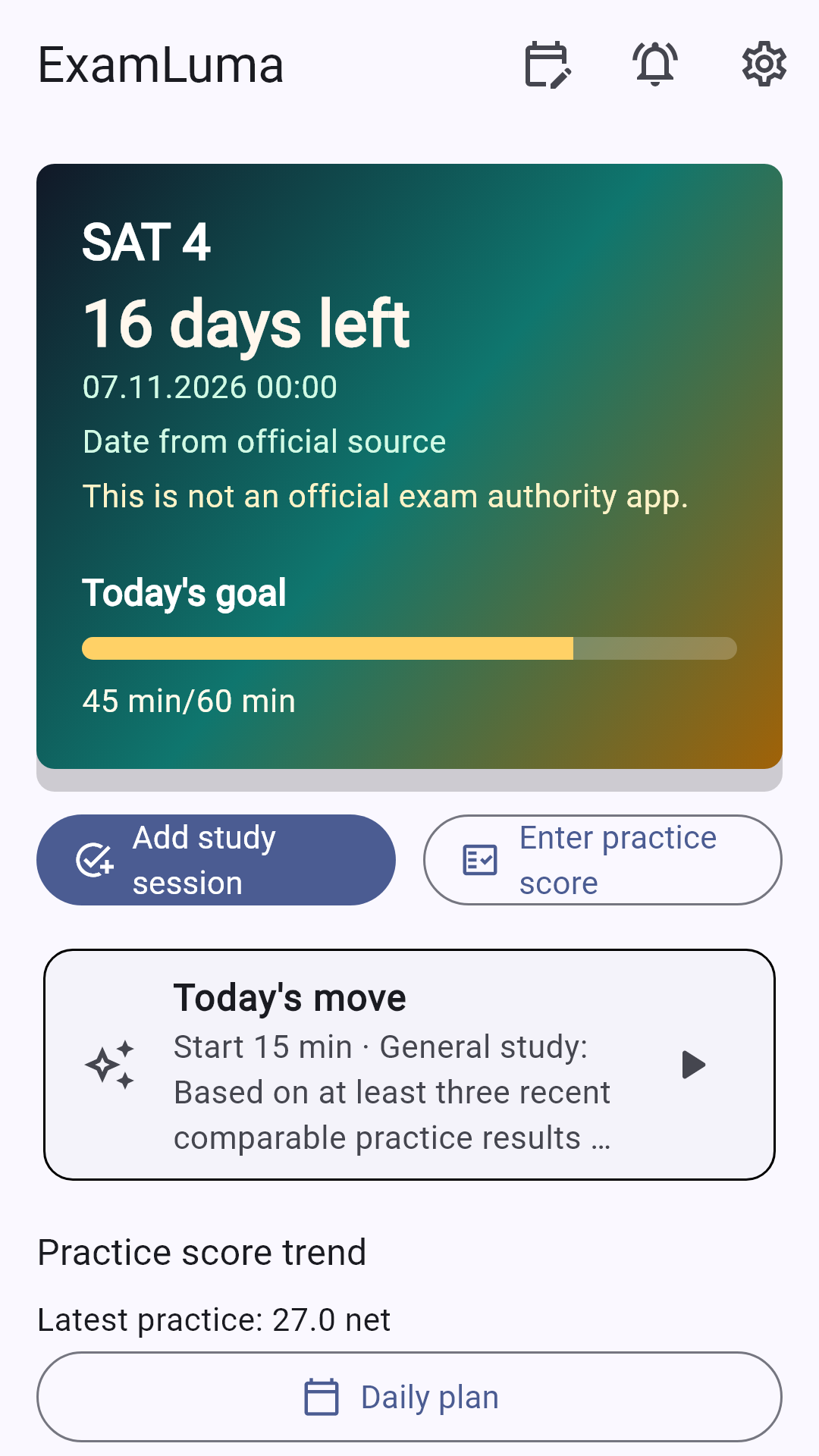
With ExamLuma you can set O-NET as the chosen exam, follow a countdown, set a daily study-time target and use the focus timer. Enter practice results yourself to view general trends and weekly study statistics, keeping official subject scores in their original reporting context.
How ExamLuma helps
Keep track of your study plan in ExamLuma. ↗
Set a daily study goal and follow your progress. ↗
Record completed study sessions. ↗
Frequently asked questions
What is the difference between my O-NET score and an average?
Your score describes individual performance; a school or national mean summarises the results of a larger group.
Can I compare averages from different school levels?
Choose the same level, subject and cycle before interpreting changes or relative position.
Does the O-NET average decide university admission?
The receiving institution publishes its own conditions for any use of the examination result.
Sources
- NIETS geographic O-NET score reporting · National Institute of Educational Testing Service, Thailand
- NIETS published example of individual O-NET report · National Institute of Educational Testing Service, Thailand
- NIETS O-NET reporting and educational use · National Institute of Educational Testing Service, Thailand