How to Study for the SAT and ACT at the Same Time
Mark both test dates, then decide which exam gets the next uninterrupted practice session. Use a recent result from each test to find a skill you can work on once and try in both formats. Keep separate notes on pacing, directions, and the questions that still catch you by surprise.

Last updated:
Write both exam dates on the same calendar. Add your fixed commitments, then find the time you could actually spend on practice and review. Start with a recent SAT result and a recent ACT result. Mark one skill that shows up on both and one task that belongs to each exam.
Decide which test gets the longer session
Start by asking why each test is on your calendar. One might be offered at school, while you booked the other to try a format that felt more comfortable in practice. If a college or scholarship application is part of the reason, check its own score policy and deadline. Those details can settle which exam deserves the next open weekend.
If you’re still deciding whether to sit for both, start with practice materials before committing to another registration. Try the formats in comparable conditions. Record where the clock interrupted you and where extra time still left you puzzled. A score from a rushed ACT session after soccer practice and a score from a quiet Saturday SAT session answer different questions about how you work.
When you pick a lead exam, write down what would justify switching. That might be finishing the nearer test, learning that your school has scheduled a test, or finding that a required class project takes up your practice weekend. This makes changing the calendar an ordinary decision you can explain.
Share the lesson and keep the practice questions separate
Suppose you missed a rate problem on both tests. Look at the units first. Picture a tank that already holds some water when a pump starts adding water at a steady rate. Draw the tank, label its starting volume, and write down the units of the rate. Explain how the amount in the tank changes if the pump runs longer.
Now choose an unfamiliar rate problem from each exam. In one, you might need to describe what the coefficient means. In the other, you might need to work backward from the total. Getting the expression right is a shared skill. Catching which quantity the prompt asks for is a separate decision each time. Write down which step you could do on your own.
The same approach works for editing. Look for a sentence boundary in a fresh example and explain how you identified a complete thought. Apply the rule on both tests. If only one format still slows you down, keep the next drill in that format. The SAT Reading and Writing guide can help you name the SAT skill you want to revisit.
Keep pacing notes for the exam where you made them
On the SAT, Reading and Writing and Math each use modules, with performance on the opening module helping determine the next module, as College Board explains. Use full-length Bluebook practice when your question is about managing a complete SAT session. Note which module you were in when you felt rushed.
For the ACT, keep English and reading on separate lines and include the additional sections listed for your administration. The ACT section guide distinguishes editing a passage in English from understanding a passage in reading. In official ACT practice, try a section under the timing that applies to you. A useful note names the passage or problem where your approach stopped working.
Sample plan
Imagine your ACT comes first and an SAT follows later. This example assumes a long enough gap for separate stretches of practice. Switch the exam names if the order on your own calendar is reversed, or shorten a phase when the dates are closer together.
- Weeks 1–4, while both exams are still ahead. Put 2 sessions on the calendar for a shared skill. Use the first to learn the method and try it in ACT practice. Use the second to try it in SAT practice and compare the points where you hesitated.
- Weeks 5–8, as the ACT approaches. Reserve a longer opening for an ACT section or full practice test, plus time to review it. Use a shorter opening for a familiar SAT task. If your week fills up, save the ACT review and move the shorter task.
- Weeks 9–12, after the ACT. Write down your own habits while they’re fresh, such as losing time switching between a passage and the choices. Leave test questions out of your notes. Turn to Bluebook for the next sustained practice session.
- Final 4–8 weeks before the SAT. Pick an SAT skill and a pacing decision from that session. Try each on new material. Cross off completed ACT reminders so they stop taking up space in the plan.
If a school assignment takes the time you set aside, carry forward the unfinished task with the clearest purpose. A calendar entry that says “retry a rate problem and check the units” is easier to resume than one that says “catch up on both tests.” Use the weekly planning guide to place that task around the commitments you still have.
How ExamLuma helps
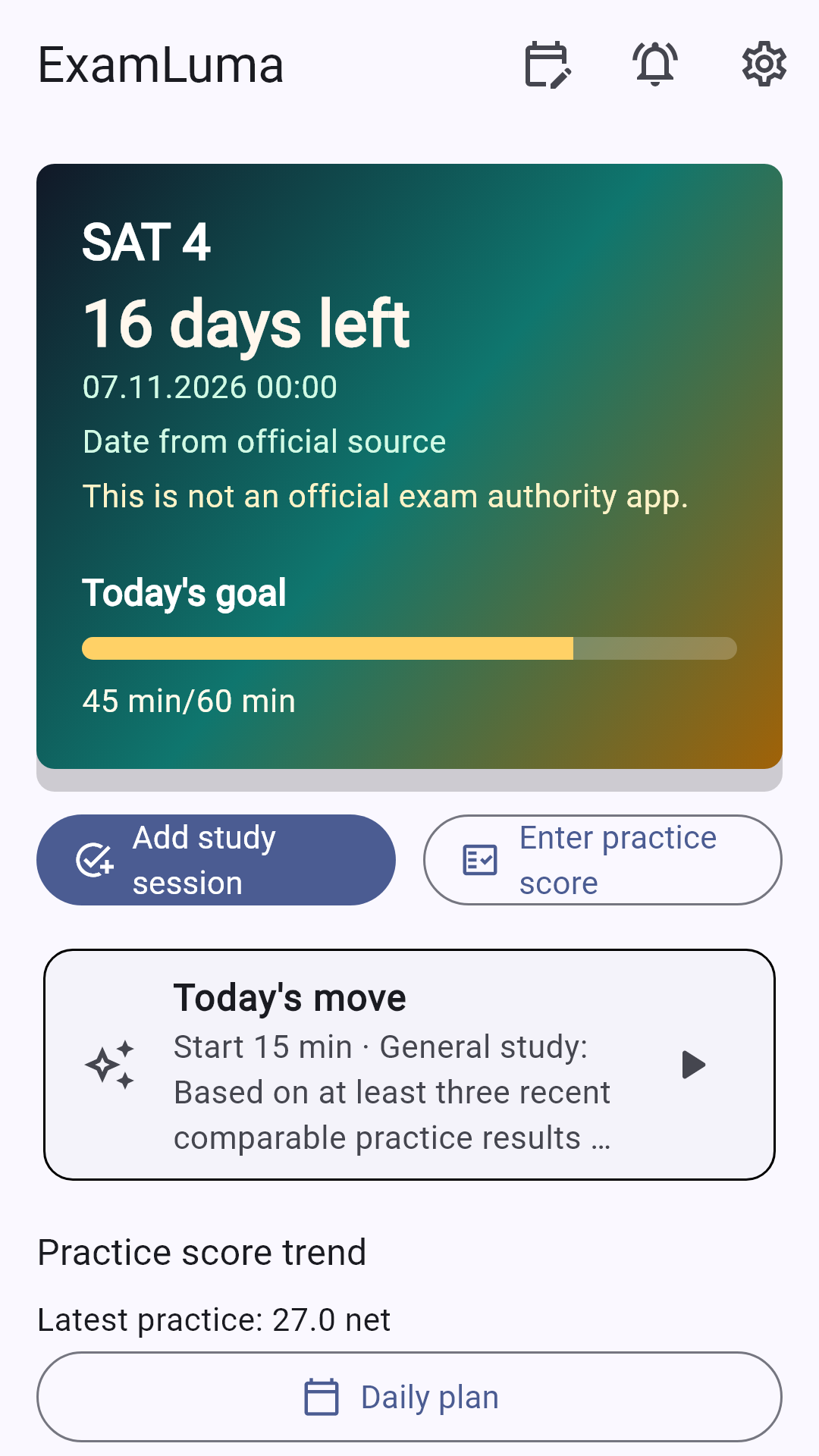
Keep track of your study plan in ExamLuma. ↗
Set a daily study goal and follow your progress. ↗
Record completed study sessions. ↗
Frequently asked questions
How should I split my time if one exam is much closer?
Give the closer exam the practice time you need to rehearse its format and review the result. Keep a small task for the later exam only if it addresses a skill you want to keep using.
Can I use the same math practice for the SAT and ACT?
Use a common topic, such as rates, to learn the method. Then solve an unfamiliar question from each test and check whether you recognized the relationship in both settings.
What should I compare after I try both exams?
Compare where you stalled and what would fix it. Keep each score with its own test, and use the demands on your calendar and your reasons for taking each exam to choose your next commitment.
Sources
- How the SAT Is Structured · College Board
- Full-Length Digital Practice Tests on Bluebook · College Board
- ACT Exam Sections, Structure and Timing · ACT
- Free ACT Practice Tests and Test Prep · ACT