A Sophomore and Junior Year SAT and ACT Timeline
Use sophomore year to find out what your school offers and what you still want to learn about the SAT or ACT. In junior year, choose a first test that fits your coursework and your application plans. Leave room to see the result before deciding whether a second sitting serves a purpose.

Last updated:
Mark the parts of sophomore and junior year that already have a claim on your time. A lab course, a family trip, or a busy season at work can narrow your options before you even look at test dates. The timeline you need is a set of decisions you can make as your school and college plans take shape.
Find out what your school handles
Ask your counselor which assessments the school offers, who signs students up, and when you should look for instructions. Keep the answers in the same place as the school calendar. If a teacher announces an upcoming practice test, write down its full name so you can tell it apart from an SAT or ACT you arrange yourself.
If the PSAT/NMSQT is on your radar, ask about sign-up through the high school. College Board directs students to their school counselor for that process. A good question to ask is, “What do I need to do myself, and what message should I look for next?” If you need testing accommodations, also ask who coordinates requests and where to find the instructions for the exam you are considering.
Match practice to what you have actually learned
Before choosing how much prep to put on the calendar, look at a small amount of practice work. Mark a missed question according to what happened. Maybe you understood the algebra but overlooked the unit in the prompt. Maybe the topic is coming up in a course you are taking. The first problem gives you something to practice now. For the second, ask your teacher where the topic fits in the course and flag it for another look.
If you are considering both exams, try material from each when you can give it similar attention. Write a few sentences about the experience. On which tasks could you explain your reasoning? Where did you spend time finding your place or understanding the directions? Those notes can help you choose a test to focus on. Beside your SAT notes, name the Reading and Writing or Math task where you felt most rushed. Beside your ACT notes, name the section where extra time helped you get unstuck. Take those observations to your counselor when you discuss your first sitting.
Work back from a reason to take the test
As your list of colleges or scholarships takes shape, go to each program’s own admissions or scholarship page. Record the relevant application cycle, whether you want or need an exam score for that purpose, and the last day to test or the deadline for scores to arrive if the program specifies one. If an instruction is unclear, send the office the exact wording you are trying to interpret.
Now check the options for a first sitting. For weekend testing, look up current locations and deadlines through SAT registration or ACT registration. If you plan to use a school-day test, ask for your school’s information before booking a weekend seat as well. Consider transportation, fees or fee waiver arrangements, and your commitments in the days around the test. Leave time to get your result and make a decision about it.
Sample plan
Use these checkpoints as an example. Move them to match your school’s offerings, your course sequence, and the time you have.
- Sophomore year: Ask the counselor about school testing and try a small set of questions. Bring one marked math problem to class and ask whether the underlying topic is coming up. Write down a skill you can already practice.
- Between school years: Sketch your junior-year commitments. Mark the season when you expect to have the least free time. Pick a quiet opening for practice and another for looking over the results before choosing a test.
- Early junior year: Follow up on school sign-up instructions, including PSAT/NMSQT information if relevant. Compare the SAT and ACT if you are still choosing. Decide which one deserves your next substantial practice session.
- Before a first sitting: Confirm the registration steps, travel plans, and any arrangements you need. Set a reminder for the action you must take, such as checking your account for confirmation. Keep schoolwork and recovery time visible beside practice.
- After results arrive: Compare what happened with your original reason for testing. If you see a specific skill to improve and a later sitting fits your deadlines, consider putting it on the calendar. If your result already serves your purpose, return the space to coursework or applications.
Leave a useful note for your future self
At the end of junior year, save a short record of the test you took, where to find your result, and which questions about your applications remain open. If you are considering a retake, include the change you would make in practice and the deadline you need to verify. If your list of colleges changes over the summer, you can revisit those few details instead of rebuilding the timeline from memory.
How ExamLuma helps
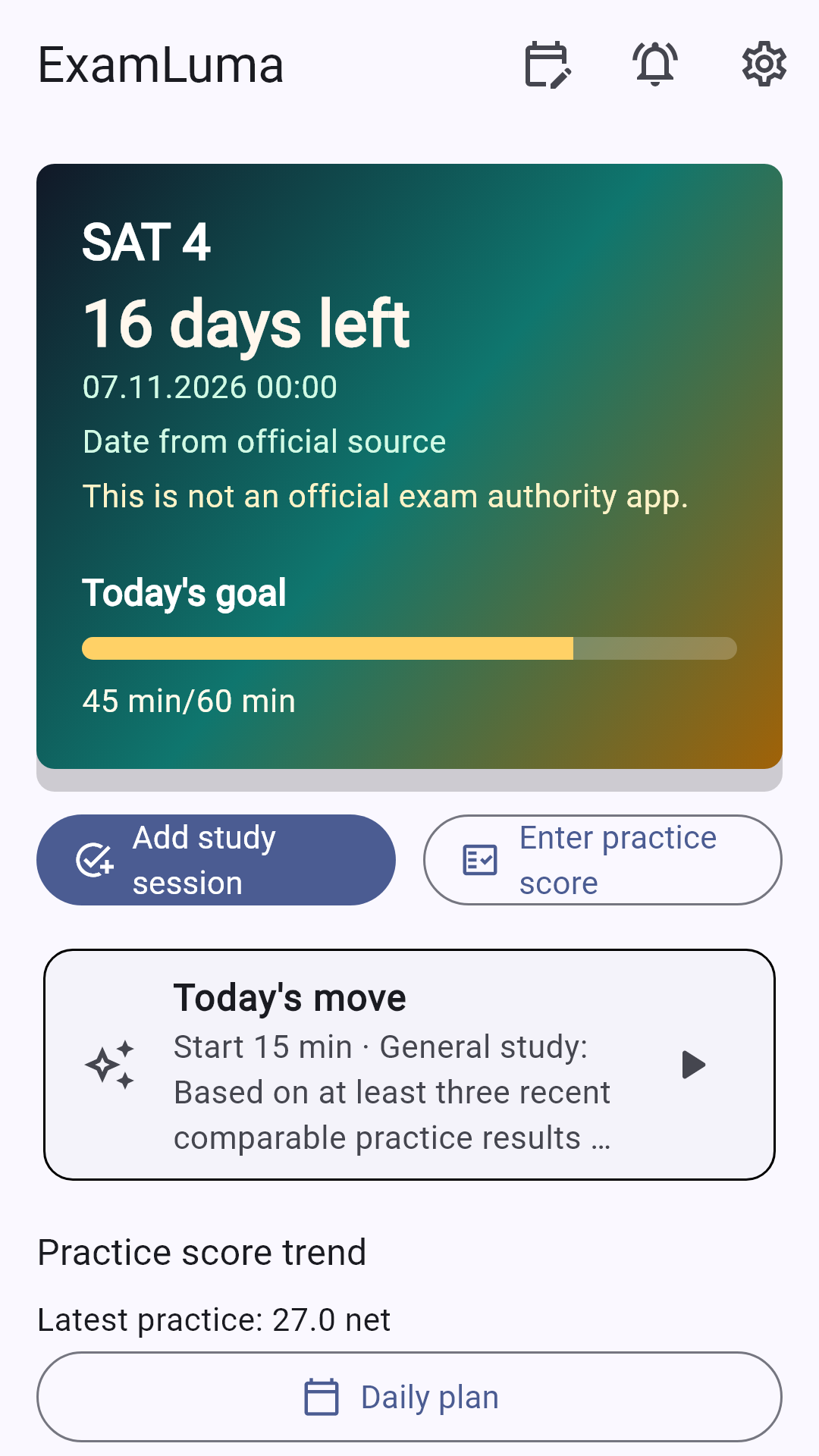
Keep track of your study plan in ExamLuma. ↗
Set a daily study goal and follow your progress. ↗
Record completed study sessions. ↗
Frequently asked questions
How can I start planning before I have a college list?
Gather school testing details and note the parts of your year that are already busy. Try official practice and keep notes on what felt familiar. Add application or scholarship requirements once you have specific programs in mind.
Who handles registration for the PSAT/NMSQT?
Ask your high school counselor how your school handles sign-up. Keep those instructions separate from registration for a weekend SAT or national ACT.
What if I only start thinking about testing late in junior year?
Start from the deadlines that matter to you now. Check current test availability, find a realistic practice opening, and choose a first sitting that fits. You can skip earlier planning tasks once you have the information they would have supplied.
Sources
- How do students sign up to take the PSAT/NMSQT? · College Board
- SAT Registration · College Board
- ACT Registration · ACT