GCSE Grades in England: Boundaries and Results
GCSE results in England show individual subject grades. Exam boards turn raw marks into grades using boundaries set after marking. The boundaries reflect paper difficulty, so a raw percentage needs the context of its exam series. Combined science receives a double grade. Read the relevant subject outcome against the requirements of your next course or training route.

Last updated:
What your GCSE result means in England
GCSE results should be read subject by subject. A strong grade in mathematics expresses an achievement against the mathematics specification, while a grade in English language reflects a different set of assessed skills. The official GCSE grading explanation for England places results on the 9–1 scale: 9 is the highest grade, 1 the lowest, and U means ungraded.
England’s numerical scale is distinct from the GCSE grading systems used elsewhere in the United Kingdom. The official guide identifies grade 4 as broadly comparable to the old grade C and grade 7 to the old grade A. These are reference points rather than a full conversion table between old and new qualifications. For a particular college or training route, use the grade specified in its current entry conditions.
From raw marks to a reported grade
Your marks reflect the answers and assessed work you produced in a specific exam. Ofqual’s grading guidance explains that awarding bodies mark responses against schemes, analyse performance information and use senior examiner judgement when setting boundaries. This helps maintain comparable standards even when one paper proves more demanding than another.
A grade boundary is the mark required for a grade in that subject, specification and exam series. It can shift between sessions, making the same raw mark potentially correspond to a different grade on another paper. When reviewing a mock, use the boundaries issued by your awarding body for that paper, then note whether missed marks came from knowledge, explanation, calculation or interpreting the question.
Why combined science looks different
The Department for Education’s GCSE grading guide explains that combined science is a double-award qualification and receives a pair of grades. Those paired grades represent the combined assessment across the science course. Read both parts together when checking any course entry requirement, and distinguish a combined science result from a separate science subject grade.
Schools and colleges may ask for particular results in English, maths, science or a chosen subject. Examine the exact course requirement rather than compare the grades with a single national admissions average. If you are considering sixth form, an apprenticeship or further education, note the subject named in each offer and the awarding scale it uses.
Make the results useful for revision
Use the GCSE revision guide to turn a raw-mark breakdown into targeted practice. For an essay-based subject, review the criteria for argument and supporting detail; for maths, distinguish a method error from an inaccurate final calculation. Track the same skill over time so that a grade change has a useful explanation.
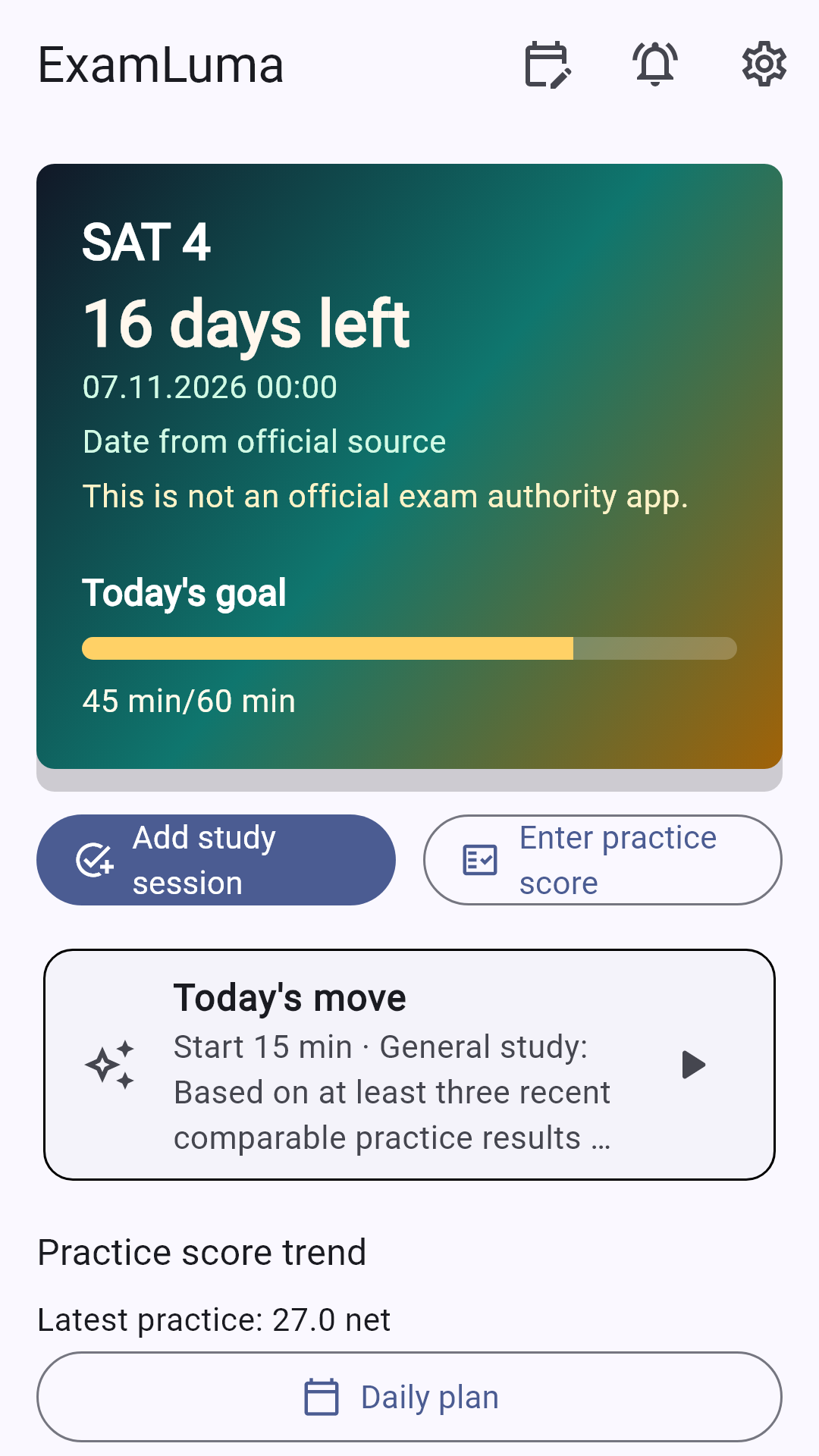
In ExamLuma, choose GCSE as your target exam, follow the countdown and set a daily study-time goal. Use the focus timer during revision, enter correct, wrong and blank practice counts yourself, and review the overall trend and weekly study statistics to plan your next sessions.
How ExamLuma helps
Keep track of your study plan in ExamLuma. ↗
Set a daily study goal and follow your progress. ↗
Record completed study sessions. ↗
Frequently asked questions
Why do GCSE grade boundaries change?
Awarding bodies review performance and examiner judgements for each exam series to maintain comparable standards despite differences in paper difficulty.
What is special about combined science results?
Combined science is a double-award qualification, so the result consists of a pair of grades rather than a single subject grade.
Should I use one grade requirement for every college course?
Check the admissions conditions for your chosen sixth form, college or training route and the specific English or maths requirements involved.
Sources
- GCSE 9 to 1 Grade Scale Explained · Ofqual / Department for Education
- How GCSE and A Level Grading Works · Ofqual